estimated incident cases of sepsis worldwide
Rudd et al. ↗ InSIDE™Request a briefing
 02 Science & evidence
Sepsis rarely
announces itself cleanly.
In a newborn, early deterioration can look like ordinary instability: a quieter baby, a subtle rhythm change, a little more respiratory effort. The clues are often present before the diagnosis. They are simply scattered across time and systems.
EVIDENCE LIBRARY10 cited sourcesLast reviewed August 2026
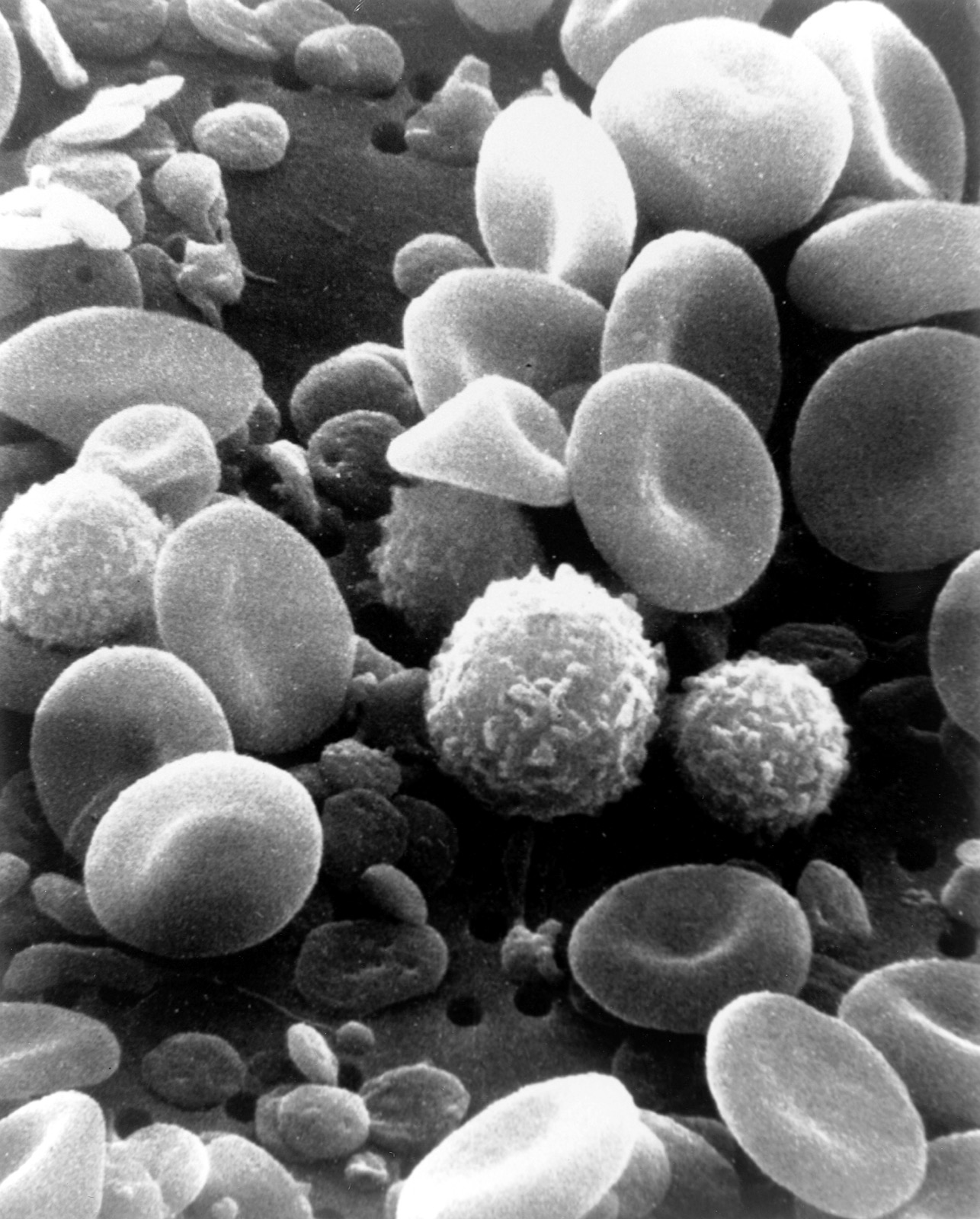
Blood cells under scanning electron microscopy.
NCI / Bruce Wetzel & Harry Schaefer · Public domain ↗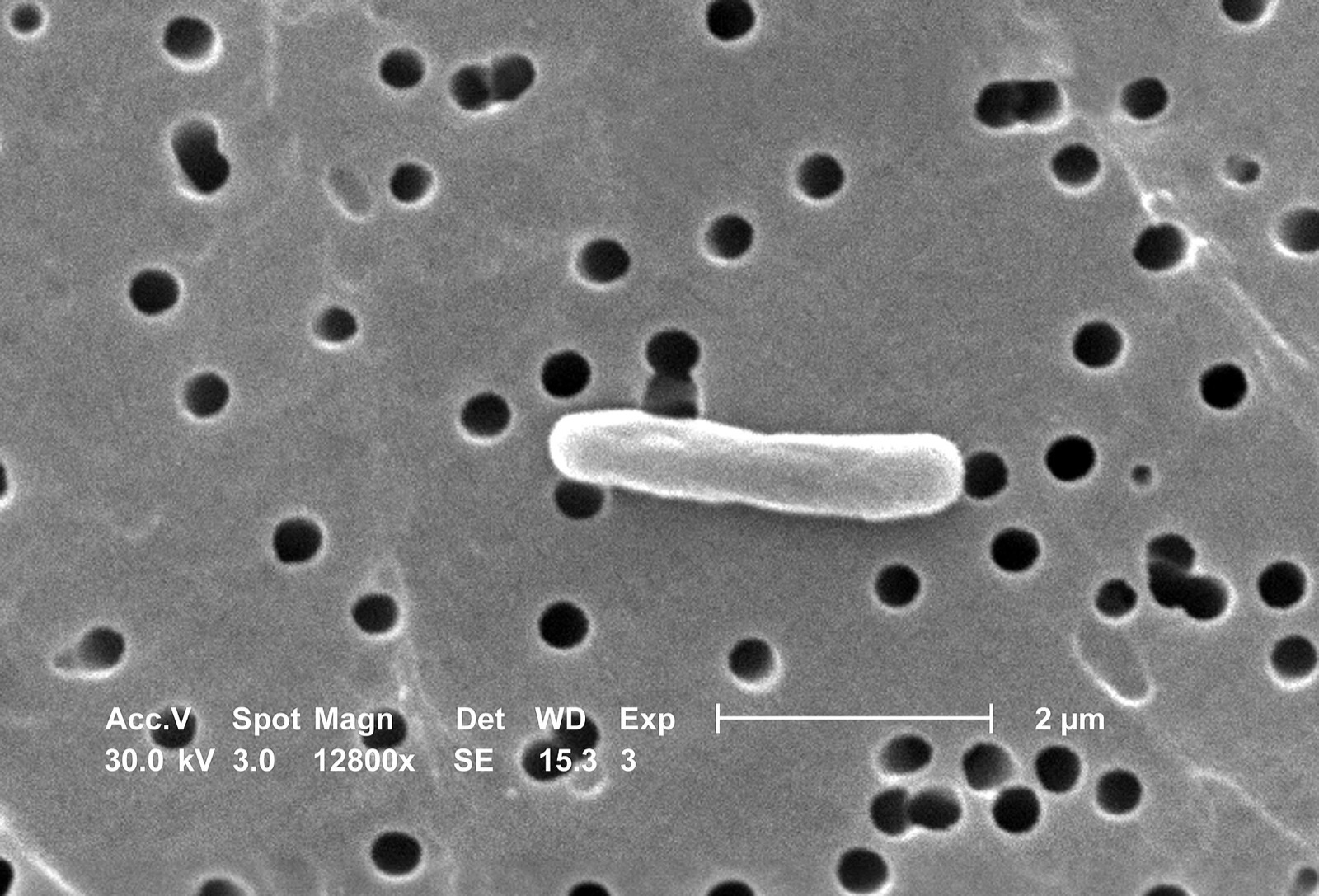
Escherichia coli under scanning electron microscopy.
CDC / Evangeline Sowers & Janice Carr · Public domain ↗01 What sepsis is
“A life-threatening condition that happens when the body’s immune system has an extreme response to an infection, causing organ dysfunction.”World Health Organization
The infection may begin with bacteria, a virus, a parasite or a fungus. The danger comes from the body’s dysregulated response: inflammation, impaired circulation and organ injury can reinforce one another quickly.
For neonates—especially those born preterm—the margin is narrow. Immature immunity, invasive lines, ventilation and prolonged hospitalization all shape risk. Early-onset disease generally appears within the first 72 hours and is often linked to maternal transmission. Late-onset disease begins after that window and can emerge from the care environment or community.
sepsis-related deaths—roughly one in five deaths globally
WHO ↗nearly half of estimated global cases occurred in young children
WHO ↗case-fatality rate among culture-positive cases in a five-hospital cohort
Jain et al. ↗02 India’s resistance problem
The first antibiotic
may already be wrong.
That is what makes neonatal sepsis in India especially hard: the baby can deteriorate before the team knows which organism is responsible—and many common pathogens resist several drugs.
In a prospective study across five Indian district newborn units, Gram-negative bacteria dominated culture-positive sepsis and multidrug resistance was common. An early warning cannot name the pathogen, but it can give the team more time to investigate and act.
were Gram-negative bacilli
of isolates were multidrug resistant
case-fatality rate in the cohort
One main barrier.
Many drugs can reach the cell wall more directly. Gram-positive bacteria can still be resistant, but their basic envelope has one membrane.
An extra barrier to cross.
The second membrane can keep drugs out. In the Indian district-hospital study, most organisms isolated were Gram-negative—and many resisted multiple antibiotic classes.
WHY RESISTANCE TAKES OVEROne survivor
One survivor
can change the odds.
A random genetic change—or a resistance gene shared between bacteria—can let one cell survive. The antibiotic clears susceptible cells. The survivors multiply.
Most look the same.
One cell may already carry a change that lets it survive.
Susceptible cells disappear.
If the drug misses the resistant cell, the infection is not fully controlled.
The hard-to-treat cells remain.
The surviving population grows while the clinical clock keeps moving.
THE CLINICAL RACEFind the change sooner.
Find the change sooner.
Narrow the treatment sooner.
When resistance is common, every lost hour compresses the time available to examine the baby, obtain cultures, review local resistance patterns and adjust treatment.
DETERIORATION BEGINSCLINICAL RECOGNITIONCULTURE + SUSCEPTIBILITY
STANDARD SIGNALInvestigate and treat
InSIDE™ AIMEarlier pattern → investigate sooner
MORE TIME TO GET THE FIRST DECISION RIGHT
What InSIDE™ does: surfaces a changing multimodal pattern for clinical review. What it does not do: identify the organism or prescribe an antibiotic.
03 Why time matters
330minutes
Delay changes the odds.
In a 2024 multicenter cohort of 19,515 pediatric emergency patients, antibiotics given 330 minutes or more after arrival were associated with higher 3-day and 30-day sepsis-attributable mortality.
Read the study ↗04 The case for continuous patterns
A trend can speak
before a threshold does.
A landmark randomized trial of 2,989 very-low-birth-weight infants found a 22% relative reduction in inpatient mortality when heart-rate-characteristic monitoring was displayed to clinicians.
A later analysis reported lower sepsis-associated mortality in the displayed-monitor group. These results do not validate InSIDE™, and InSIDE™ is not the monitor studied. They do show that clinically meaningful information can live in the shape and timing of physiological change—not only in isolated values.
Review the randomized trial ↗05 After survival
The consequences may outlast the infection.
Across 17 studies involving 15,331 very-low-birth-weight infants, neonatal sepsis was associated with roughly twice the odds of one or more long-term neurodevelopmental impairments. That is why earlier recognition matters beyond the acute episode.
ASSOCIATED ODDS RATIO2.0995% CI 1.65–2.65Alshaikh et al. ↗
06 References
Read the evidence,
not a summary of it.
These are the sources behind the claims on this page. Where a result comes from a pediatric or non-neonatal population, we say so.
01
Rudd KE, et al.
↗02Global, regional, and national sepsis incidence and mortality, 1990–2017
The Lancet · 2020
World Health Organization
↗03Sepsis fact sheet
WHO · Updated 2024
Lane RD, et al.
↗04Delays to Antibiotics in the Emergency Department and Risk of Mortality in Children With Sepsis
JAMA Network Open · 2024
Moorman JR, et al.
↗05Mortality reduction by heart rate characteristic monitoring in very low birth weight neonates
The Journal of Pediatrics · 2011
Fairchild KD, et al.
↗06Septicemia mortality reduction in neonates in a heart rate characteristics monitoring trial
Pediatric Research · 2013
Jain K, et al.
↗07Multidrug-resistant sepsis in special newborn care units in five district hospitals in India
The Lancet Global Health · 2025
Alshaikh B, et al.
↗08Neurodevelopmental outcomes of very low birth weight infants with neonatal sepsis
Journal of Perinatology · 2013
Cai S, et al.
↗09Short- and Long-Term Neurodevelopmental Outcomes of Very Preterm Infants with Neonatal Sepsis
Children · 2019
Salton MRJ, Kim KS
↗10Structure: bacterial cell walls and the Gram stain
NCBI Bookshelf · Medical Microbiology
Centers for Disease Control and Prevention
↗About Antimicrobial Resistance
CDC · Reviewed 2025
This page is for research context and does not provide medical advice. InSIDE™ is under clinical research and is not a validated diagnostic device.